Baroxon® | Leading Boom Barrier Manufacturer

What Is a Parking Barrier? Types, Uses and How It Works
Release time:
2026-11-03
Introduction: why does a car park need an automatic barrier?
Organising vehicle entry and exit has become a core part of modern car park management in Kuwait. Residential communities, shopping centres, office towers, warehouses and industrial facilities all need a clear way to verify vehicles and keep traffic orderly at the gate. This is where the parking barrier comes in, also known as a boom barrier or barrier gate.
A parking barrier works as a movable physical barrier installed at a vehicle entrance or exit. When it receives a release signal from the control system, a reading device or a security officer, the boom rises to let the vehicle through and then returns to the closed position according to the operating and safety settings.
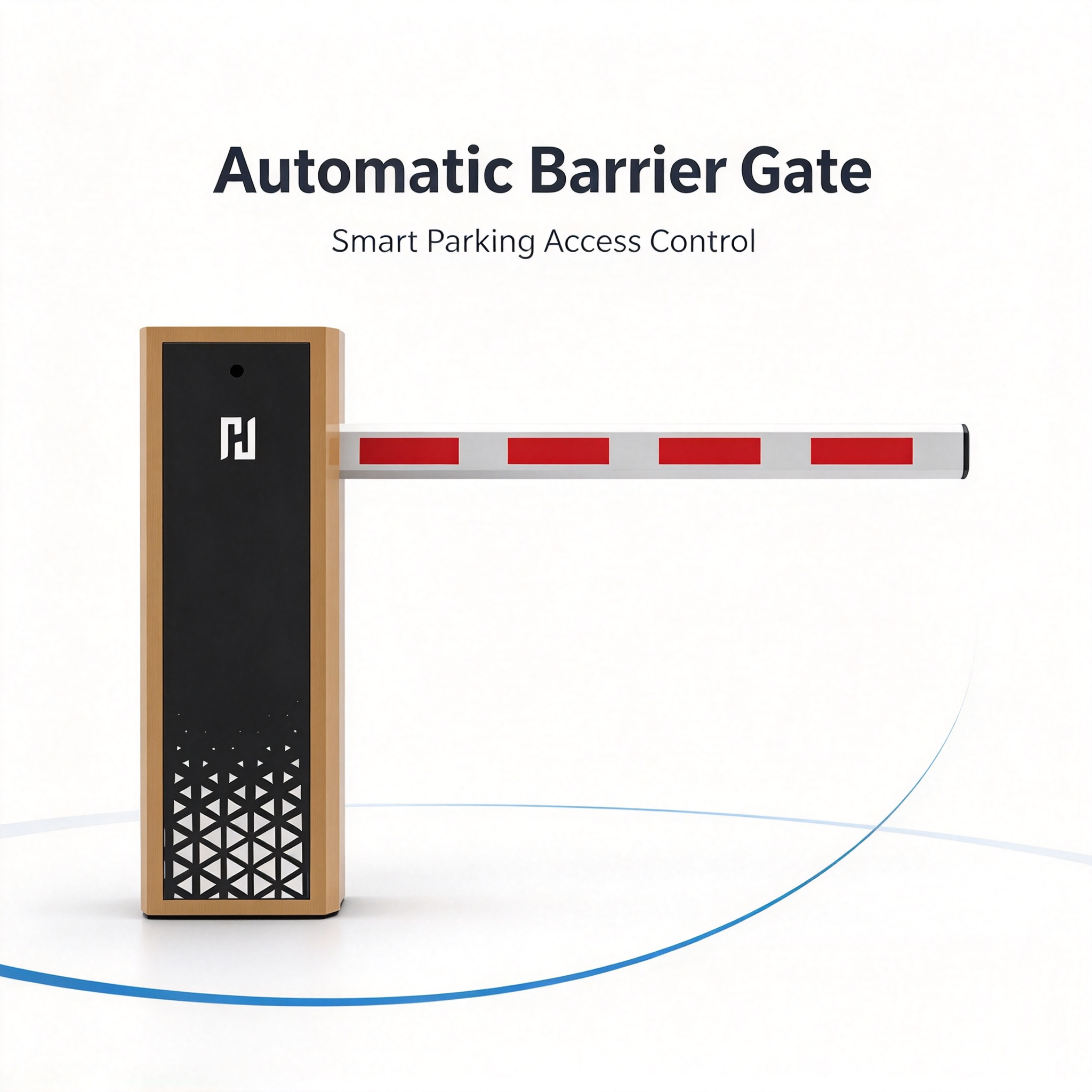
What is a parking barrier?
A parking barrier is an electromechanical device for controlling vehicle access. It usually consists of a drive unit containing the motor, transmission and control board, a boom that moves up and down, and control and safety devices matched to the system design and installation site.
The barrier can be operated by a remote control, a button in the guard room, an RFID reader, a ticketing system or an ANPR/LPR licence plate recognition camera. In integrated projects it can be connected to parking management software to log entries and exits and manage user permissions.
Main types of parking barriers
The barrier type depends on lane width, ceiling height, traffic density, vehicle types and the required control method. Common solutions include straight-arm barriers, folding-arm barriers, fence-arm barriers and high-speed barrier systems.
1. Straight arm barrier
A straight-arm barrier uses a horizontal boom that rises and rotates upwards when access is granted. It is a common choice for entrances with sufficient vertical clearance, such as commercial car parks, residential communities and public facilities. Boom length must be set according to lane width and the manufacturer's instructions.
2. Folding arm barrier
A folding-arm barrier has an articulated boom that folds as it opens, which helps on sites with limited vertical space such as some covered car park entrances or basement levels. The boom's movement envelope must be checked for obstructions before installation.
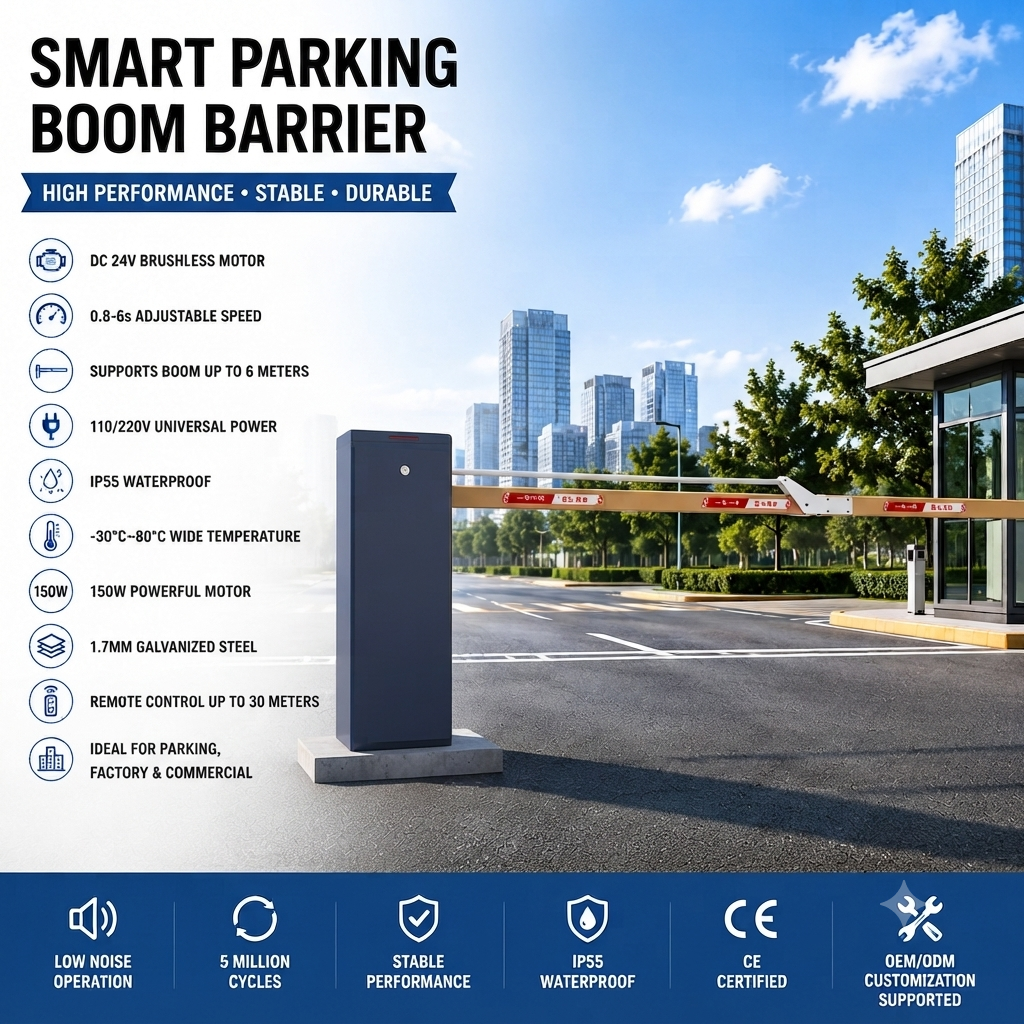
3. Fence arm barrier
A fence-arm barrier uses a boom fitted with vertical elements or a fence-like structure. It can suit entrances that need a more visible physical barrier or an additional level of deterrence against unauthorised traffic. The design should be selected after assessing lane width, wind load and safety requirements.
4. High-speed barrier
High-speed barriers are used where opening and closing cycles are frequent, such as shopping centre car parks and high-throughput facilities. BAROXON offers high-speed barrier solutions, along with brushless motor options and integrable control systems depending on the product configuration and project.
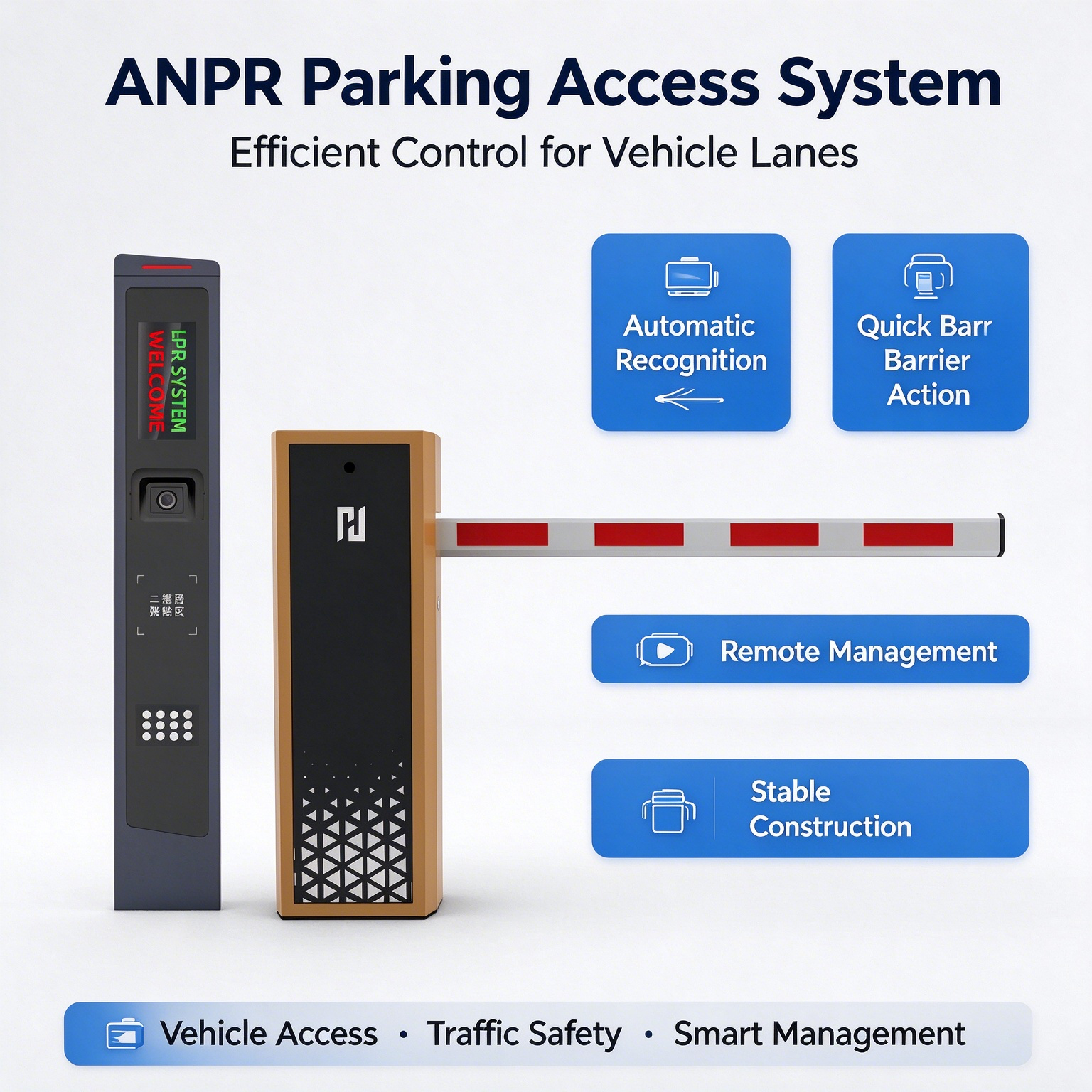
How does a parking barrier work?
Operating details vary with the controller and accessories, but a typical cycle follows these stages:
1. Vehicle detection: an induction loop, radar sensor or camera detects a vehicle at the entry point, depending on the system design. 2. Access verification: the system reads an RFID card, ticket or QR code, or captures the plate number with an ANPR/LPR camera, then compares the data with the authorisation rules. 3. Open command: when the release conditions are met, the controller sends a signal to the barrier motor to raise the boom. 4. Vehicle passage: the vehicle crosses the designated lane. Suitable sensors can help detect the vehicle or obstacles in the movement area. 5. Boom closing and logging: after the vehicle leaves the crossing area and safety conditions are met, the boom returns to the closed position. An integrated system can record entry and exit times and verification data.
It is important not to treat all barriers as identical. Automatic closing behaviour, sensor types, travel speed and obstacle response depend on the barrier model, controller and installed accessories. Consult the product manual and wiring diagram before commissioning.
What role do ANPR/LPR and RFID play with a parking barrier?
A parking barrier can be integrated with ANPR/LPR automatic licence plate recognition cameras. The camera captures the plate image, the system reads the number and checks it against the authorised vehicle list. This integration helps reduce dependence on paper tickets and simplifies management of residents, staff and visitors when the system is configured for the site conditions.
RFID relies on reading a card or electronic tag linked to an authorised vehicle or user. An automatic RFID barrier can be used in staff car parks, residential communities and logistics fleets. Read range and reliability depend on the reader type, the tag, the mounting position and the surrounding environment.
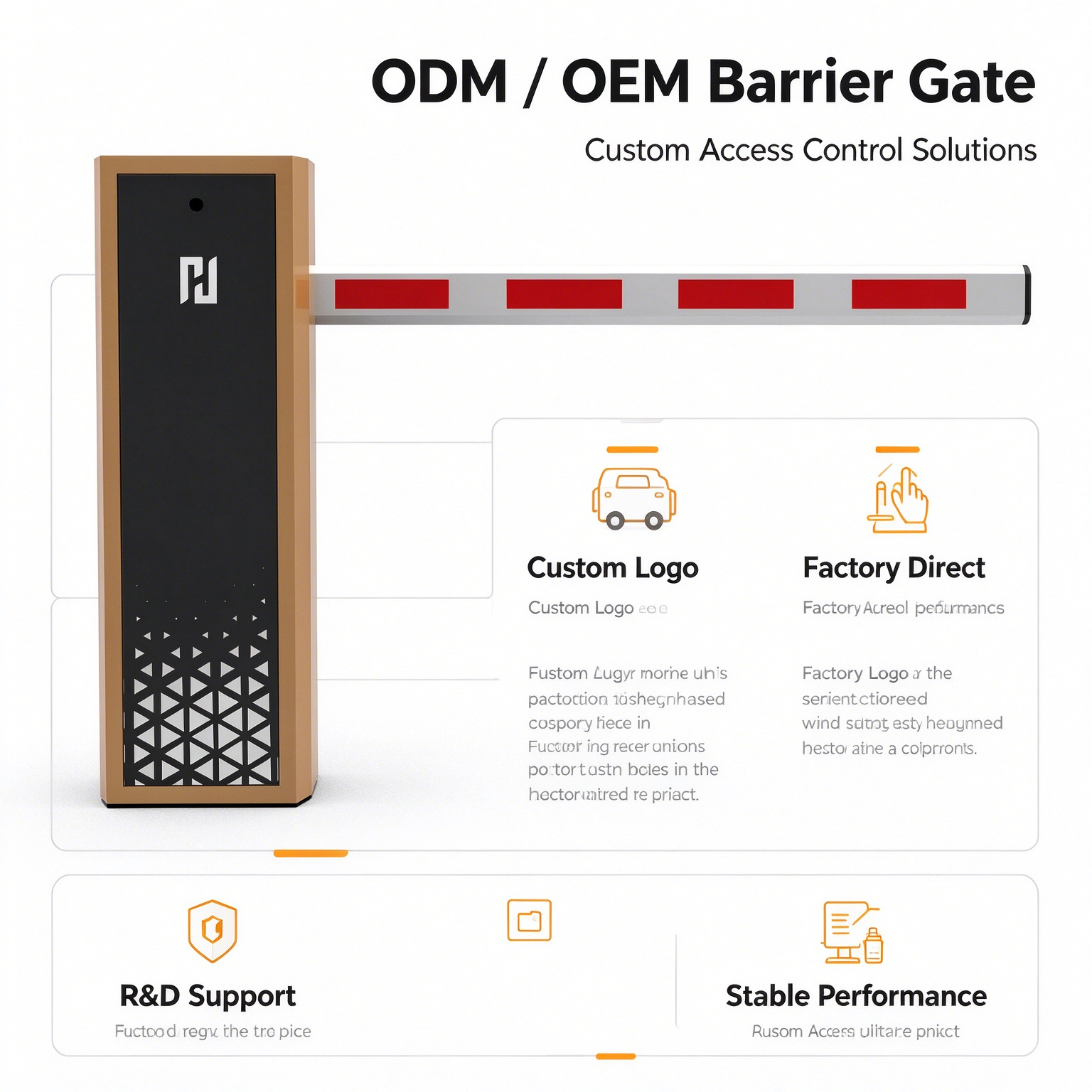
Where are parking barriers used in Kuwait?
Residential communities and villas
Automatic barriers help manage resident and visitor access, and can be linked to licence plate recognition, RFID or intercom systems according to project requirements.
Shopping centres and office buildings
Barriers can organise lanes and connect entry to ticketing, payment or plate recognition, in line with the car park management policy.
Factories and industrial sites
These sites may need heavy-duty barriers, booms sized for wide lanes, or long-range RFID readers to manage vehicle and fleet movement.
Warehouses and logistics centres
Connecting the barrier to RFID or a vehicle registration platform helps control truck entry and document fleet movements.
Airports, ports and public facilities
Barriers can be integrated with vehicle control systems, pedestrian gates and central logging, according to the facility's security and operating requirements.
How to choose the right parking barrier for your project
Before buying a parking barrier, assess a set of technical and operational factors rather than relying on price or appearance alone.
- Lane width and boom length: measure the entrance width and determine the appropriate boom length, allowing for turning space and safety zones.
- Available height: choose a straight or folding boom according to ceiling height and existing obstructions.
- Traffic density: estimate peak-hour vehicle numbers and the daily operating cycles required.
- Motor and drive mechanism: compare motor options such as brushless or servo systems where available, against speed, duty cycle and maintenance requirements.
- Safety and detection: confirm that the barrier is compatible with the vehicle detection radar sensor and the protection devices required for the site.
- Integration with access systems: check whether the barrier can connect to a licence plate recognition system, RFID, ticketing or parking management software.
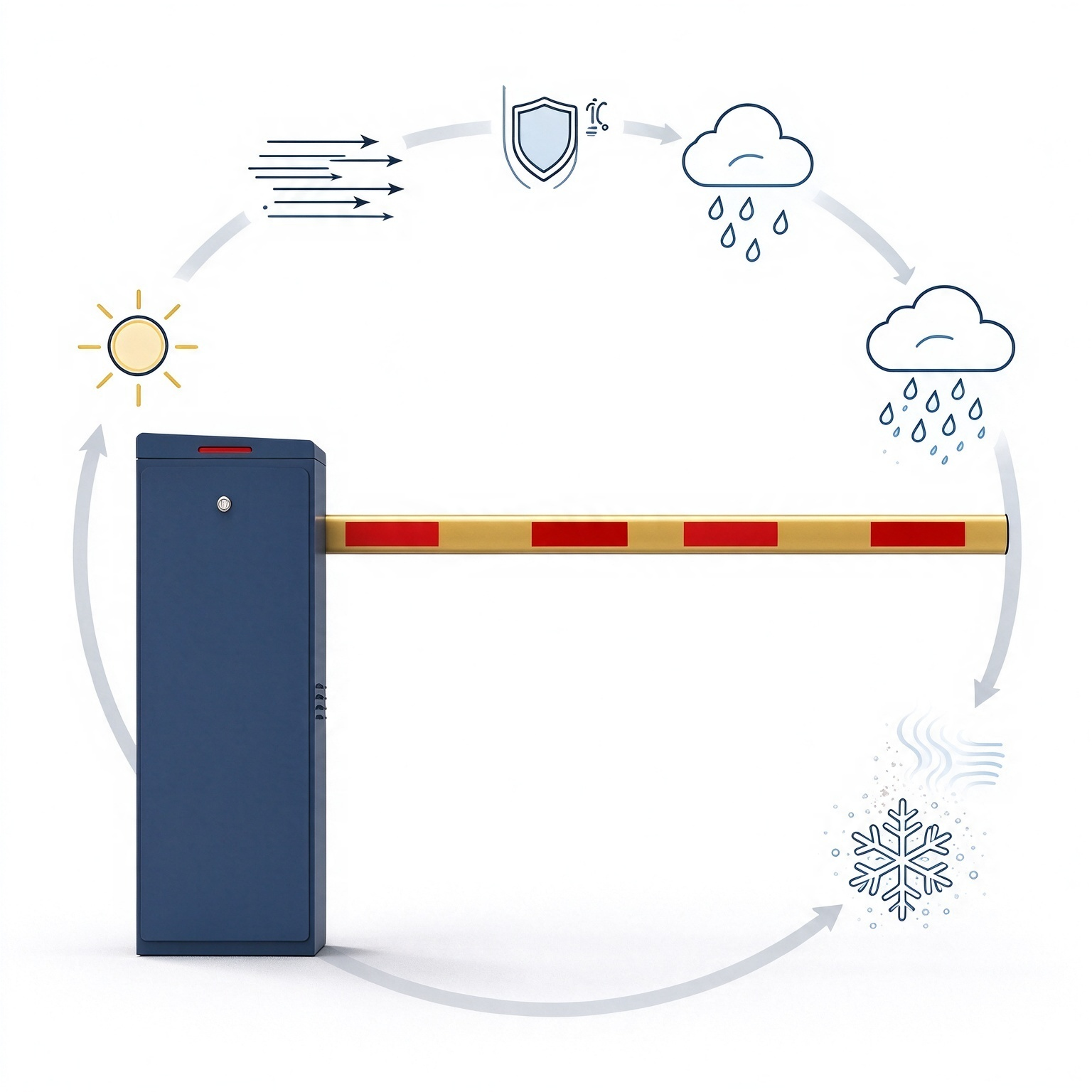
- Environmental conditions: in Kuwait, assess heat, dust, sunlight, wind and cleaning water, and verify the protection rating and materials specified for the model.
- Installation and after-sales: request foundation and wiring drawings, operating instructions, and confirm spare parts availability and technical support.
Why consider BAROXON parking barrier solutions in Kuwait?
Through its Kuwait-focused website, BAROXON offers a range of vehicle access control solutions including automatic boom barriers, high-speed barriers, ANPR/LPR systems, RFID solutions, radar sensors and pedestrian access control equipment. The system configuration can be matched to the project, whether it is a residential entrance, a commercial car park, an industrial facility or a logistics centre.
Published company information mentions brushless DC and servo motor options, weather-resistant cabinets in some configurations, and features such as crash protection and integration with parking management platforms. Actual specifications and site suitability must be confirmed through the datasheet of the selected model before ordering.
Conclusion
A parking barrier is more than a boom that opens and closes; it is part of a vehicle access management system. Choosing the right type and connecting it to the appropriate control method helps regulate traffic, improve car park management and document vehicle movement. Start by defining lane width, usage intensity, available height and safety requirements, then compare straight, folding, fence and high-speed barriers.
If you are planning a car park entrance in Kuwait, review the product categories and solutions available from BAROXON, and request a technical recommendation based on lane width, vehicle numbers and the required control method.
Frequently asked questions
Is a parking barrier the same as a barrier gate?
The terms are usually used for the same device: an automatic barrier with a moving boom that controls vehicle passage. Naming may vary by market or product type.
What is the difference between a straight and a folding barrier?
A straight barrier uses a horizontal boom that lifts upwards, while a folding barrier's boom folds as it opens. The folding type is normally chosen where vertical space is limited.
Can a parking barrier be connected to a licence plate camera?
Yes. The barrier can be integrated with a compatible ANPR/LPR system to verify vehicle plates and trigger opening when the release conditions are met.
Can RFID be used instead of tickets?
RFID can be used as an identification method for authorised vehicles or users, but the choice depends on the car park policy, visitor management and the required integration.
What should be checked before installing an automatic barrier in Kuwait?
Check lane width, available height, foundations, power supply, wiring, wind, dust and heat exposure, sensors, and the safety and maintenance requirements.
Does your car park entrance need an automatic barrier?
Contact the BAROXON team through the contact page to discuss your site type, lane width and control method, and get a technical recommendation before purchase.
Latest News
Baroxon® | Leading Boom Barrier Manufacturer
Advanced Security Access Control and Intelligent Parking Solutions.
Company Strength
Adequate Inventory
Fast Shipping
Our Products
CONTACT US
Address: No. 2 Wanshou Road, International Innovation Industrial Park, Jinan, Shandong, China







© COPYRIGHT 2025 Baroxon® | Leading Boom Barrier Manufacturer


Contact Us
Our passion is to bring your ideas to life. Work with our design team to create a one-of-a-kind custom finish or cladding system to create a truly unique space. Together we can make your story stand out. If you need something to request a sample, request pricing, or request a demo, please fill out the contact form below. Explain your request in as much detail as you can and a representative will contact you within 1 business day.